
Review
We Used The Wedy for Our Own Wedding: An Honest Review
We used The Wedy for our own Tenerife wedding. An honest look at invitations, bilingual content, RSVPs, seating and where the platform helped most.
The most important test of The Wedy so far
When we started building The Wedy, we wanted to solve a problem we understood professionally: wedding planning is fragmented across invitation builders, spreadsheets, messages and disconnected planning tools.
Then we had to organise our own wedding.
Anastasiia and I got married in Tenerife on June 20, 2026. Our guests came from different countries, spoke different languages and needed clear information about the ceremony, transport, accommodation and the wedding-day schedule.
This turned our wedding into the most important test of The Wedy so far.
We did not create a fictional demonstration with perfect sample guests. We used the platform for a real celebration, with real deadlines, changing information and the same seating complications every couple eventually faces.
This is our honest review of what worked, what required more effort and where we found the platform most valuable.
“The Wedy is our own product. This review is based on how we used it for our wedding, so it is not an independent third-party review. We have included both the advantages and the areas where the experience can still improve.”
Why we used The Wedy for our wedding
We could have used a conventional wedding website and managed everything else separately.
That would have meant:
- Creating the invitation on one platform
- Receiving some replies through the website
- Receiving other replies through WhatsApp
- Copying confirmed guests into a spreadsheet
- Managing dietary requirements separately
- Rebuilding the guest list for the seating plan
- Creating another document for the venue layout
- Producing a separate seating display for the wedding day
We wanted to avoid that fragmentation.
Our objective was to give guests one beautiful and reliable place to find the wedding information while keeping the information they submitted useful throughout the rest of the planning process.
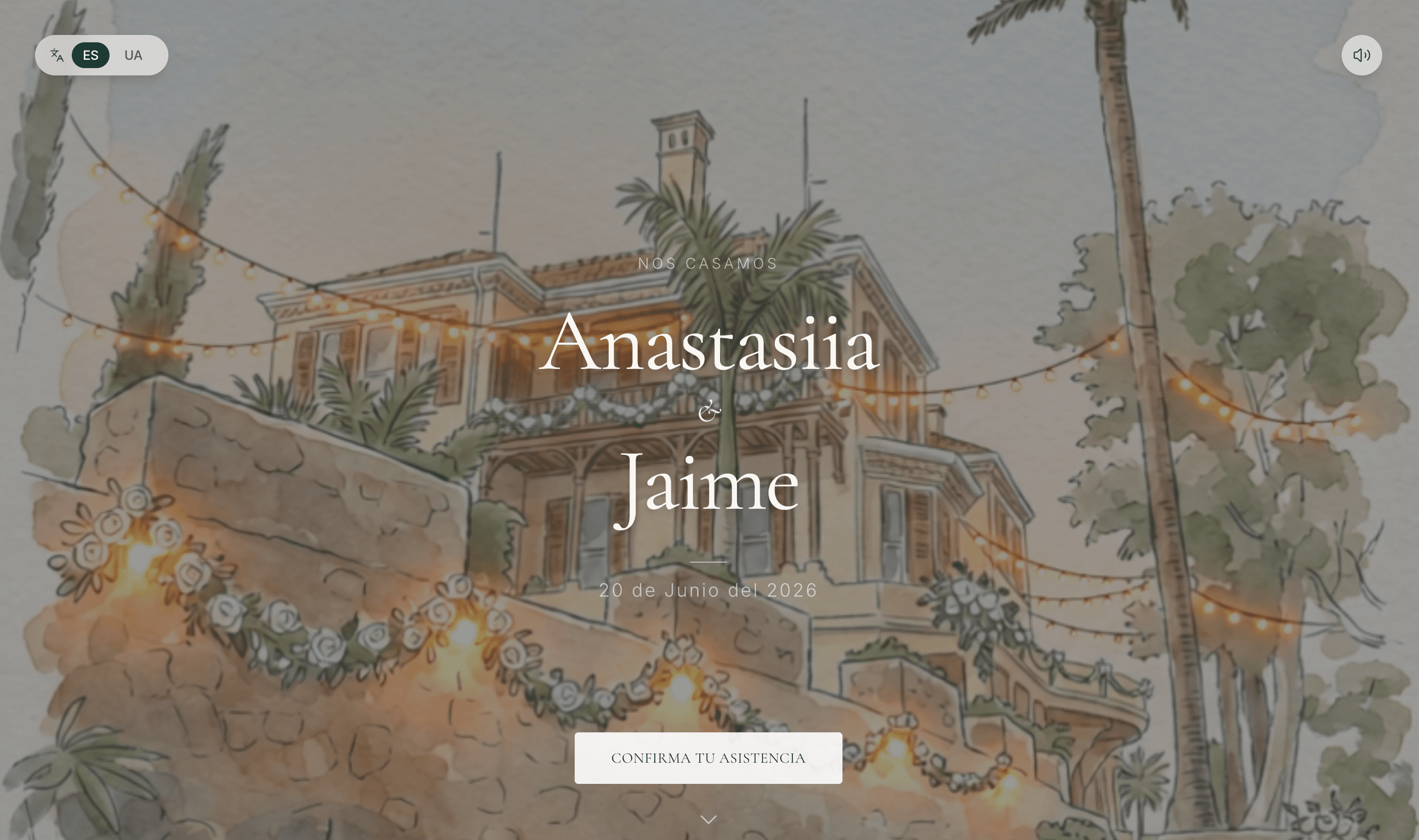
The public website included the wedding date, celebration information and attendance confirmation for our June 20, 2026 wedding in Tenerife: Boda Anastasiia & Jaime.
Our real wedding invitation
The public invitation was not created as a generic demonstration of the product. It was the website our guests actually received.
We needed it to communicate the personality of the wedding while remaining simple enough for guests to understand immediately.
The invitation gave us space to organise the experience into clear sections rather than sending guests a long sequence of messages. Depending on what each couple needs, The Wedy can include:
- A main introduction
- Wedding date and countdown
- Ceremony and reception information
- Schedule
- Venue locations
- Transport
- Accommodation
- Dress code
- Gift information
- Frequently asked questions
- RSVP form
For us, one of the most important benefits was having a single link we could update. If a practical detail changed, we could change the website rather than sending a corrected PDF or asking guests to find the latest message in a WhatsApp conversation.
Design quality was not optional for us
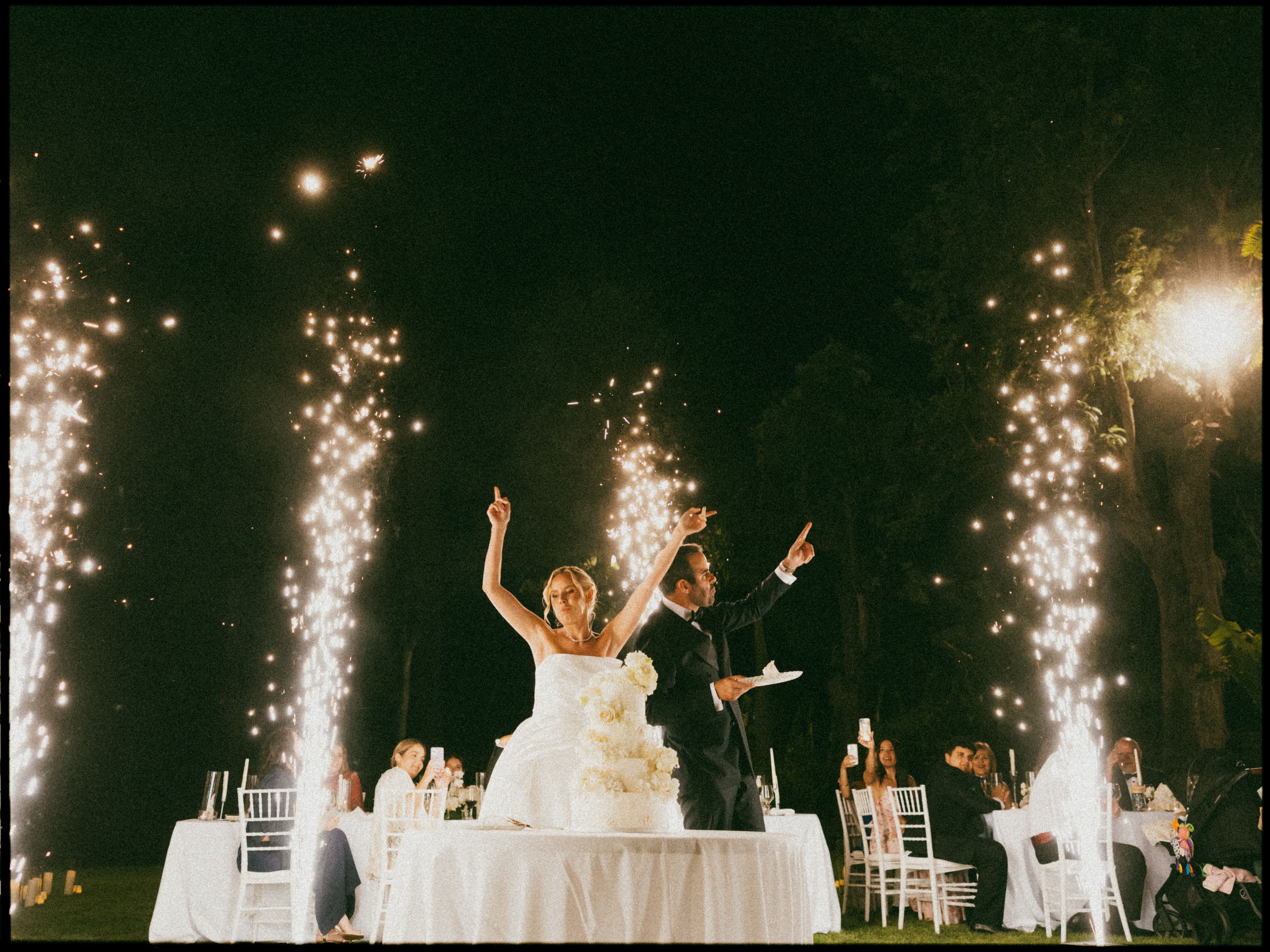
We did not want the invitation to feel like a form with wedding decorations added around it.
The website was the first complete presentation of the wedding that many guests experienced. Its typography, imagery, spacing and movement therefore mattered to us almost as much as the information itself.
The Wedy’s invitation system starts from complete design collections rather than an empty page. Couples can then personalise the content, imagery, colours and selected visual elements without needing to design every screen themselves.
That balance was important.
A completely unrestricted website builder can offer flexibility, but it can also produce inconsistent results. A rigid template is easier to use, but may not feel personal. Our aim was to provide enough flexibility to make the invitation belong to the couple while protecting the quality of the original design.
In our case, we spent more than ten minutes perfecting the final website. A simple first version can be created quickly, but a highly personalised wedding invitation naturally requires more attention.
That is an important distinction:
“The Wedy can help you create the structure quickly. The time spent making it deeply personal depends on how much detail you want to add.”
Building the invitation
The initial process was straightforward:
- Create the wedding project
- Add our names, wedding date and venue
- Choose the invitation design
- Add the main wedding sections
- Upload imagery
- Configure the RSVP
- Preview the invitation
- Publish and share the link
Starting with an existing design meant that we were not making decisions about every margin, type size and mobile breakpoint.
The more time-consuming part was preparing and reviewing the content. We still had to make sure that times, locations, transportation details and guest instructions were correct.
No platform can remove that responsibility from the couple.
The editor makes publishing easier, but couples still need to provide accurate information and check the final guest experience carefully.
Using two languages
Our wedding brought together Spanish- and Ukrainian-speaking guests, so presenting the information clearly across languages was a real requirement rather than an optional feature.
The Wedy supports bilingual wedding invitations, allowing couples to prepare the invitation in up to two languages and give guests a language switcher on the public page.
For an international wedding, this is much better than placing two long translations underneath each other on every screen.
It helped us:
- Keep each version readable
- Present the same structure in both languages
- Explain practical information more clearly
- Make the invitation feel inclusive
- Reduce the need to prepare separate websites
There is still some work involved. A bilingual website means maintaining two versions of the copy and checking both carefully whenever information changes.
Translation technology can accelerate the process, but important wedding details should always be reviewed by a person who understands the language.
The guest experience
Guests did not need to download an application or create an account.
They opened the invitation through a standard web link, normally from their phone. This was essential because most wedding invitations are now shared through WhatsApp, email or another messaging service.
The guest journey was designed to be simple:
- Open the invitation
- Review the wedding information
- Find the relevant locations and schedule
- Confirm attendance
- Submit any requested information
The mobile experience mattered more than the desktop version because that is how most guests would access it.
We therefore paid particular attention to:
- Readable typography
- Clear buttons
- Image loading
- Section order
- Location links
- RSVP usability
- Language selection
A visually impressive desktop website would not have been enough if the mobile invitation felt difficult to use.
RSVP management
This was where the invitation began to become a planning tool.
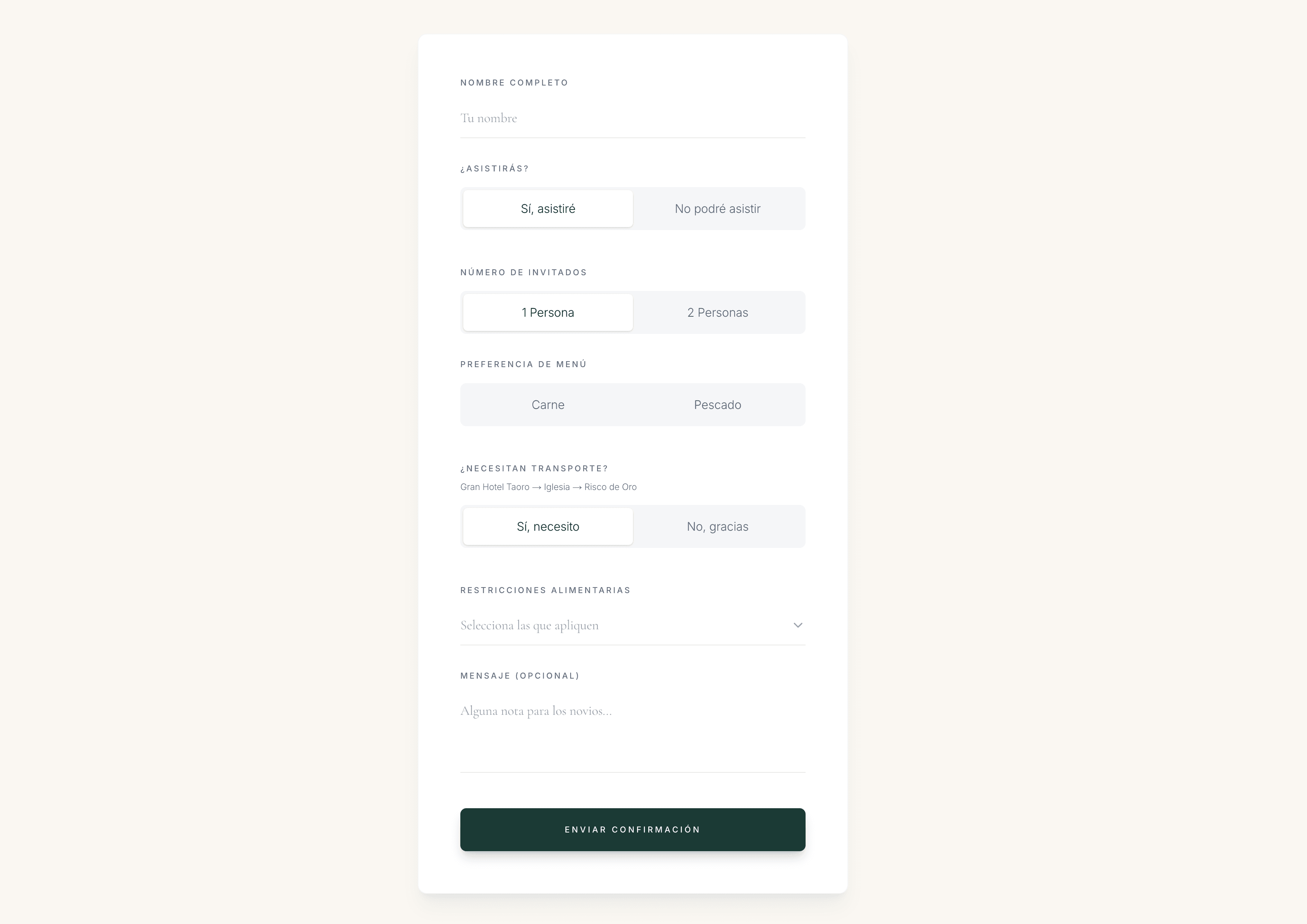
Instead of collecting only a yes or no, the RSVP system can gather structured information such as:
- Attendance
- Contact details
- Plus-one information
- Meal choices
- Dietary restrictions
- Answers to custom questions
- Responses for an individual or party
- RSVP status
For guests, the experience remained part of the invitation.
For us, the information became part of the guest directory instead of remaining inside separate messages.
This reduced one of the most common wedding-planning problems: having different types of guest information in different places.
Without a structured system, a couple can easily end up with:
- Attendance in a spreadsheet
- Dietary restrictions in WhatsApp
- Plus-one names in email
- Family groups in personal notes
- Seating decisions in another file
The Wedy does not eliminate the need to follow up with guests who do not respond, but it gives couples a clearer view of who is attending, who has declined and who is still pending.
The biggest benefit came after the RSVP
Many digital wedding invitation products complete their job when a guest submits the RSVP.
For us, that was only the beginning.
The confirmed guest directory later became the basis for the seating plan.
Our workflow was:
- Invitation
- RSVP responses
- Confirmed guest list
- Families and groups
- Seating requirements
- Table assignments
- Venue floor plan
- Guest table lookup
This continuity was the strongest part of using The Wedy.
We did not have to build the invitation list and seating list as completely separate sets of data. Guest information remained connected to the project as the planning became more detailed.
Creating the seating plan for a real international wedding
A wedding seating plan is not simply a list of names distributed evenly across tables.
For our wedding, we needed to consider:
- Couples
- Immediate families
- Extended families
- Spanish-speaking guests
- Ukrainian-speaking guests
- Friends from different parts of our lives
- Guests who already knew each other
- Guests who knew almost nobody
- Table capacities
- The overall balance of the room
- Practical needs
- Last-minute changes
A spreadsheet can store the names, but it is much less effective at representing the relationships between them.
The Wedy allowed us to organise guests into groups, record relevant relationships and move people between tables visually.
The seating system supports rules such as:
- Must sit together
- Should preferably sit together
- Should not sit together
- Must not sit together
- Same group
- Separate group
- Near an exit
- Near the couple
- Language preference
- Accessibility requirements
Not every wedding needs all these rules, but they become valuable when a guest list includes several families, countries and social groups.
Did AI create the seating plan for us?
AI can help create an initial arrangement from guest groups, relationships and seating rules.
It can identify combinations that are easy to miss manually and reduce the work required to build the first version.
However, we would not describe AI as a replacement for the couple or planner.
There are nuances that a system may not fully understand:
- Family history
- Personal sensitivities
- Informal expectations
- Which personalities will enjoy each other
- Information the couple has not entered
- Decisions that have no objectively correct answer
Our view after working with the feature is that AI is most useful as a starting point and problem-solving assistant.
It can propose a plan. A human should still review and refine it.
Connecting the seating plan to the venue
Table assignments answer one question:
Who sits with whom?
The floor plan answers another:
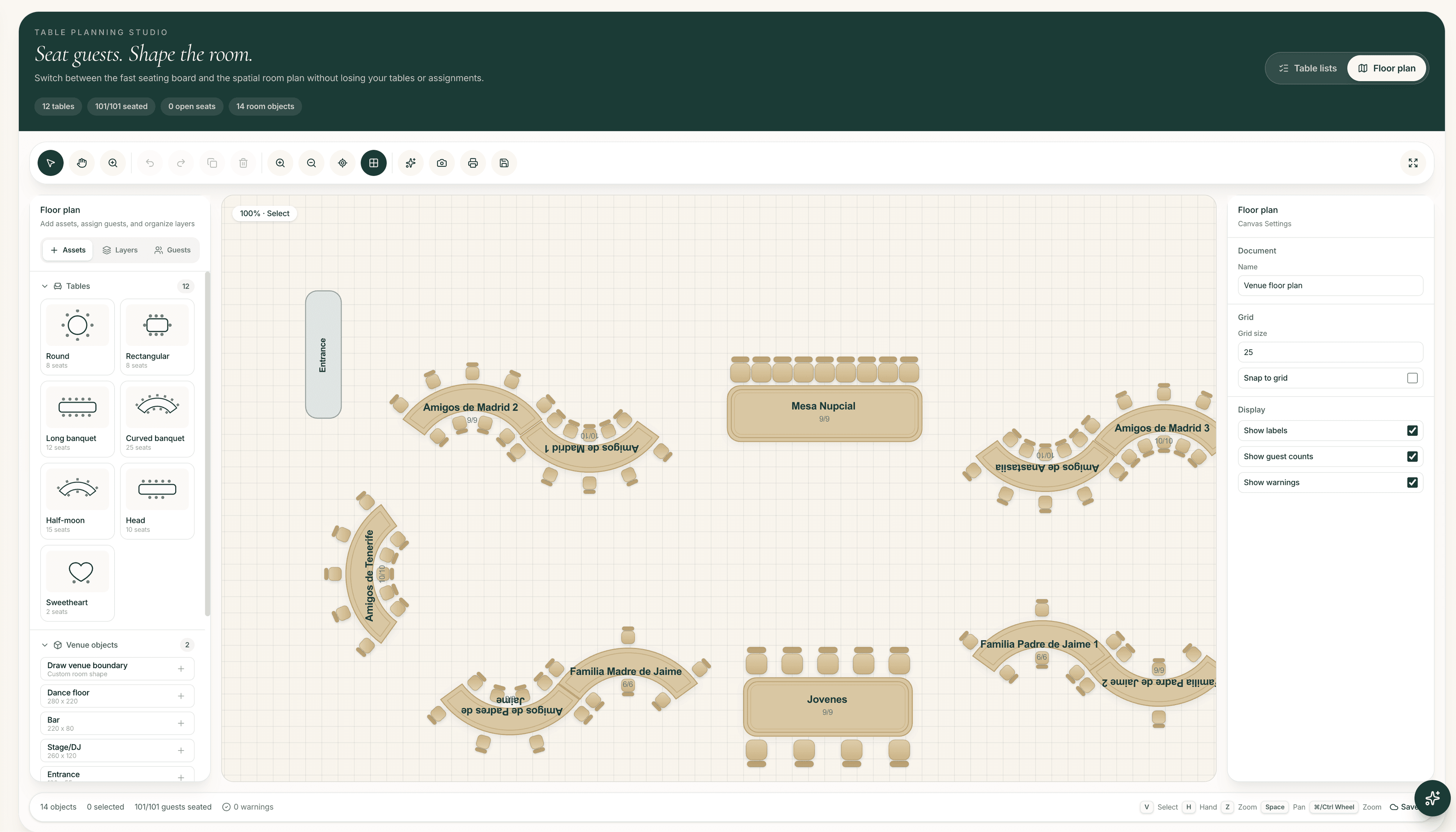
Where will each table be placed?
The Wedy keeps those two parts connected.
We could represent elements such as:
- Tables
- Dance floor
- Stage
- Bar
- Entrances and exits
- Venue boundaries
- Important service areas
This helped us think about practical issues beyond the social grouping of guests.
For example:
- Is there enough space around the tables?
- Which guests should be closer to an exit?
- Are any tables isolated?
- How does the room flow toward the dance floor?
- Can guests and service staff move comfortably?
The floor-plan tools are more valuable for weddings where the venue layout is flexible. If the venue has already fixed every table position, couples may need this feature less.
The QR table lookup
Once the seating arrangement is ready, The Wedy can generate a public table-lookup experience.
Guests scan a QR code, search for their name and see their assigned table.
This can complement or replace a traditional printed seating chart.
The advantages are practical:
- Guests do not crowd around one board
- Names are easier to find
- Last-minute table changes can be reflected digitally
- Couples do not necessarily need to reprint a large chart
- The guest experience remains connected to the same wedding system
We still like printed wedding stationery and physical details. The QR lookup does not need to replace them.
A couple could display a beautifully designed welcome sign containing the QR code and use the digital search as the functional layer.
What worked particularly well
The invitation felt connected to our wedding
The final site was not simply a database of practical details. It communicated the tone and visual identity of the celebration.
Guests had one reliable link
Instead of repeatedly sending schedules, addresses and updates, we could direct people to the invitation.
Bilingual communication was easier
Maintaining two languages required additional work, but the final guest experience was much cleaner than mixing both languages throughout every section.
RSVP information stayed organised
Structured responses were more useful than collecting attendance through informal messages.
The guest list continued into seating
This was the greatest operational benefit. The data collected during the invitation stage remained useful when the planning moved into tables and venue layout.
The platform covered the complete guest journey
The same project connected:
- Invitation
- Information
- RSVP
- Guest management
- Seating
- Wedding-day lookup
That was the main reason we preferred using The Wedy over combining several specialist tools.
What could be improved
Using our own platform for our wedding also showed us where it could become better.
Detailed personalisation still takes time
A first version is quick, but couples who care deeply about the visual result will naturally spend longer adjusting imagery and copy.
Bilingual content must be checked twice
Supporting two languages is valuable, but each version needs attention. Changing a time or location in one language means confirming that the other version remains current.
Couples still need to prepare their information
The platform can organise the content, but it cannot decide the wedding schedule, accommodation recommendations or RSVP questions for the couple.
AI seating requires human judgement
The system can create useful suggestions, but it cannot know personal dynamics that have not been entered.
The full suite may be unnecessary for very small weddings
A couple organising an intimate dinner with 20 guests may not need relationship constraints, a complex floor plan or AI seating.
Some couples will still want printed stationery
We do not see digital invitations as automatically replacing every physical detail. Printed invitations, menus and welcome signs can still be an important part of the wedding design.
What we learned from using The Wedy ourselves
The experience reinforced several product lessons.
Mobile is the real invitation
The desktop design matters, but most guests experience the website through their phones.
Practical information is as important as visual design
Guests appreciate beautiful imagery, but they return to the website for the time, location, transport and schedule.
RSVP questions need to be intentional
Every extra question creates work for the guest. Couples should collect information they genuinely need rather than treating the form like a questionnaire.
Guest data becomes more valuable over time
A name entered during the invitation stage later affects meals, seating, table capacity and the wedding-day experience.
Seating is a relationship problem
The difficult part is not drawing tables. It is understanding how guests relate to one another.
One source of truth reduces stress
The most useful system is not necessarily the one with the largest number of features. It is the one that prevents information from becoming scattered.
Who we believe The Wedy is best for
Based on our experience, The Wedy is particularly useful for:
Best suited for
- Couples who care about invitation design
- Weddings with medium or large guest lists
- International and bilingual weddings
- Destination weddings
- Weddings collecting meal or dietary information
- Couples managing several family and friendship groups
- Couples who want invitations and seating in the same system
- Wedding planners managing client guest lists and layouts
Who may not need the complete platform
The Wedy may be more than necessary for:
May be more than you need
- Very small weddings
- Couples who only need a static digital card
- Weddings without formal RSVP collection
- Celebrations without assigned seating
- Couples already committed to another complete planning platform
Those couples may be better served by a simpler invitation product.
Is The Wedy worth it?
For our wedding, yes.
The reason was not one individual feature.
It was the continuity.
The invitation our guests opened was connected to the RSVP information we received. Those responses became the guest directory. The directory became the foundation of the seating plan. The seating plan connected to the room and could ultimately help each guest find their table.
The design mattered because it was our guests’ first experience of the wedding.
The organisation mattered because it helped us manage everything that followed.
Our honest verdict is that The Wedy provides the most value when a couple needs both: a beautiful guest experience and a serious system behind it.
It will not make every wedding decision automatically. Couples still need to prepare their information, review their translations and use human judgement when arranging guests.
But it can replace a fragmented collection of invitation tools, spreadsheets and seating documents with one connected workspace.
Create your wedding with The Wedy
Create a professionally designed invitation, collect your guests’ responses and keep using the same guest list when it is time to arrange the tables.
You can also view our real wedding invitation: Anastasiia & Jaime — Nuestra Boda.
Frequently asked questions
Is this an independent review of The Wedy?
No. The Wedy is our own product. This review is based on how we used it for our wedding and includes both the advantages and the areas where the experience can still improve.
When was your wedding?
Anastasiia and Jaime got married in Tenerife on June 20, 2026.
Did you use The Wedy for a real wedding or a demo?
We used the platform for our real celebration, with real deadlines, changing information and the seating complications that come with an international guest list.
Can guests open the invitation without an app?
Yes. Guests open a standard web link on their phone or computer. Our public invitation is available at anastasiia-jaime.com.
Does The Wedy support bilingual invitations?
Yes. Couples can prepare the invitation in up to two languages and give guests a language switcher on the public page. Each version still needs careful human review when details change.
Did AI create your seating plan automatically?
AI can propose an initial arrangement from groups, relationships and seating rules, but we would not describe it as a replacement for the couple or planner. A human should still review and refine the result.
Who is The Wedy best for?
Based on our experience, it is particularly useful for couples who care about invitation design, international or bilingual weddings, destination celebrations, and anyone who wants invitations and seating in the same connected system.
Continue reading
Related stories
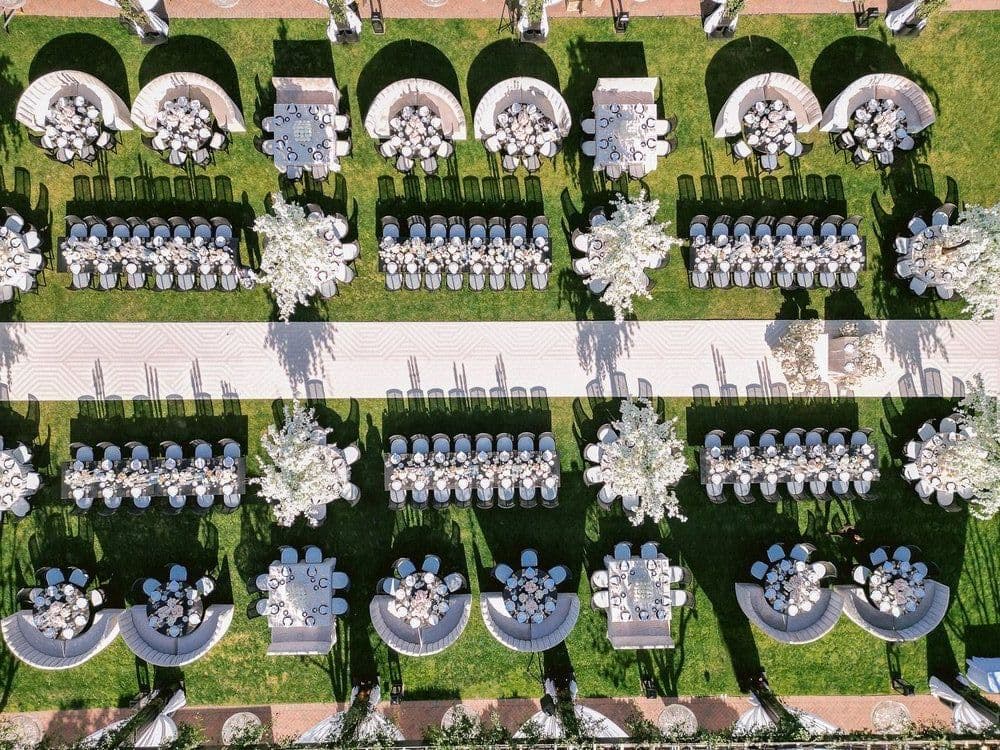
The Wedding Seating Plan Nightmare: How to Seat Everyone Without Losing Your Mind
Creating a wedding seating plan can become one of the most stressful parts of planning. Here’s how to handle family politics, friendship groups, dietary needs and last-minute changes without endless spreadsheets.

Can You Use Your RSVP Guest List to Create the Wedding Seating Plan?
Turn confirmed wedding RSVPs into an organised seating plan without copying guest information between spreadsheets and separate tools.
Best Digital Wedding Invitations in 2026–2027
Compare the best digital wedding invitation options for 2026–2027, including design quality, mobile experience, RSVP management, bilingual support and the tools available after guests respond.