Guide
When Should Wedding RSVPs Be Due?
Set your wedding RSVP deadline from the caterer’s headcount date, then leave time to chase pending guests before numbers are locked.
Etiquette does not pay the caterer
Couples often ask for a single rule: three weeks before the wedding, or four. That number is only useful after you have read the contract. The date that matters is the earliest day a vendor needs a guaranteed headcount. Your RSVP deadline has to land before that, with enough room to chase the people who have not replied.
This guide gives the usual windows, a short way to calculate your date, and the wording guests should see. The Wedy stores the deadline on the invitation, shows it on the form, and can be changed later if a vendor moves their cutoff.
Start from the vendor date
Open the catering or venue contract and find the final-count clause. Most kitchens want a guaranteed number 7 to 14 days before the wedding. Some hotels and destination venues ask for 21 days. That clause is the hard date. Miss it and you are billed on the last number you gave, or on the venue minimum.
Write down every date that depends on who is coming:
- Caterer or venue guaranteed headcount
- Meal choices, if they are plated and counted separately
- Bus or transfer seats
- Welcome dinner or brunch counts
- Place cards, menus and a locked seating plan
The earliest of those dates is your anchor. The RSVP deadline is not the same day. It is the last day guests should reply so you still have a follow-up week.
Typical windows, not rules
| Comparison | Usual timing | Why |
|---|---|---|
| Caterer or venue count | 7–14 days before, sometimes 21 | This is the date in the contract |
| Follow-up buffer | 7–14 days before that count | Time to message pending guests and clean the list |
| Local wedding RSVP | 3–4 weeks before the wedding | Covers a 14-day count plus a follow-up week |
| Destination weekend RSVP | 6–8 weeks before the wedding | Hotels and transfers book earlier than a local lunch |
| Large guest list (150+) | Prefer 4 weeks locally | Chasing more households takes longer |
How to calculate your date
Count backwards from the contract
- 01
Find the earliest vendor cutoff
Use the catering guarantee if it is first. If transfers or a welcome dinner lock earlier, use that date instead.
- 02
Subtract a follow-up buffer
Seven days is the minimum for a seated meal. Fourteen is safer when families are spread across countries or the list is large.
- 03
Write one calendar date
Guests need “10 June”, not “three weeks before”. Put the same date on the invitation, the form and any paper card.
- 04
Check the invitation send date
Local invitations usually go out 8 to 12 weeks before. Destination weekends often need 3 to 4 months. Guests should have at least three weeks to reply after they receive the link.
Example: the wedding is 18 October. The caterer wants numbers on 4 October. You want ten days to chase pending guests. The RSVP deadline is 24 September — about 3.5 weeks before the wedding.
Local wedding or destination weekend
A city Saturday and a three-day finca wedding should not share the same deadline. Destination guests are buying flights. If you collect replies in June for a September weekend, you can still send a later reminder for meal choices once the menu is signed off.
What changes with distance
| Comparison | Local wedding | Destination weekend |
|---|---|---|
| RSVP deadline | 3–4 weeks before | 6–8 weeks before |
| What you must lock early | Headcount and meals | Flights, hotels, transfers, then meals |
| Safe to confirm later | Exact dinner time, final playlist | Final menu wording, place cards |
| Follow-up | One round after the deadline | One early chase, then a meal reminder |

How to write the deadline
Say the date once, clearly, in the same form guests will see on a calendar. “Kindly respond by 10 June” is enough. “As soon as possible” is not a deadline. “Four weeks before the wedding” forces every guest to do maths.
- Invitation: Kindly RSVP by 10 June at [your link]
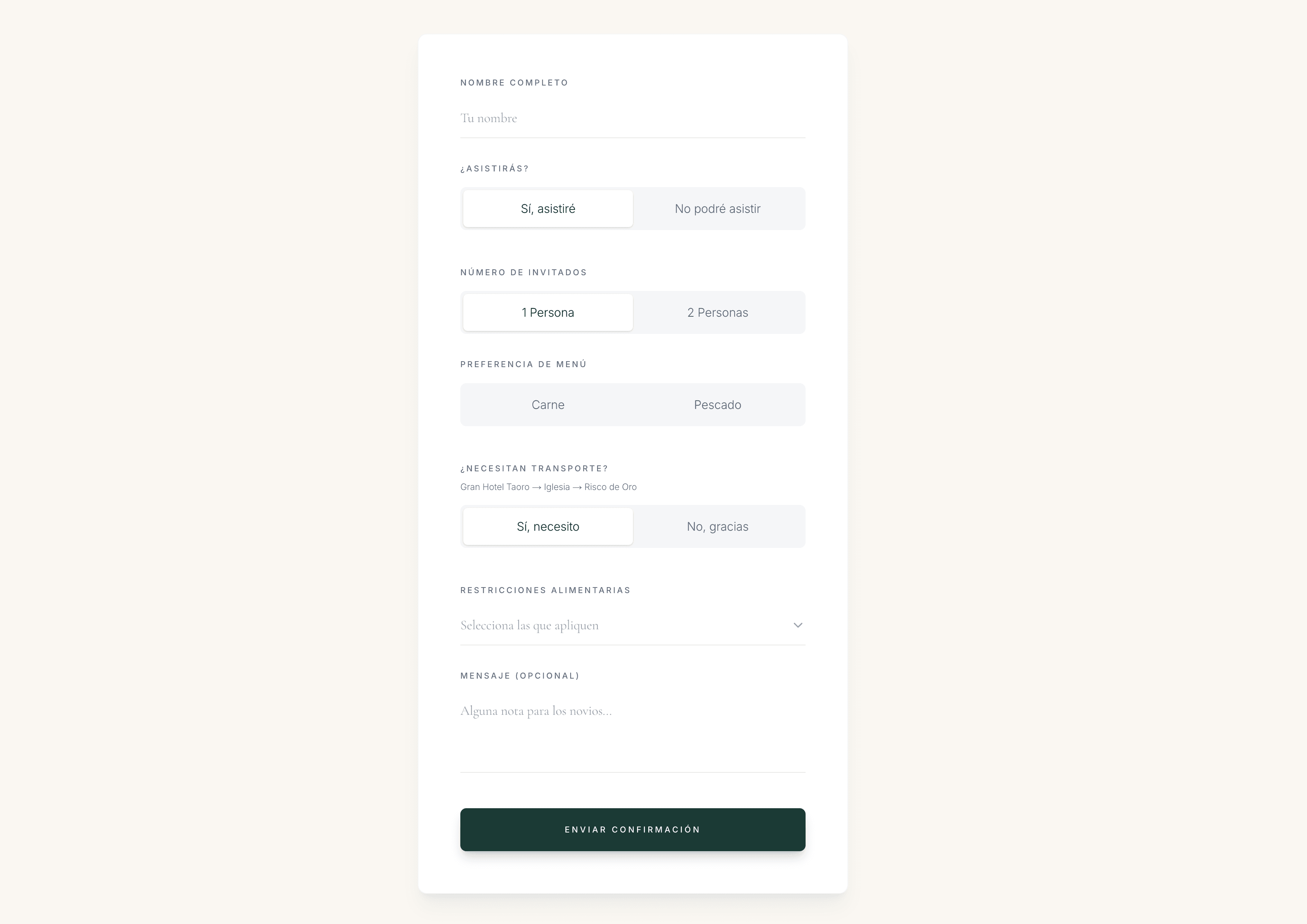
- Form: Please respond before 10 June
- FAQ: Please confirm your attendance before 10 June
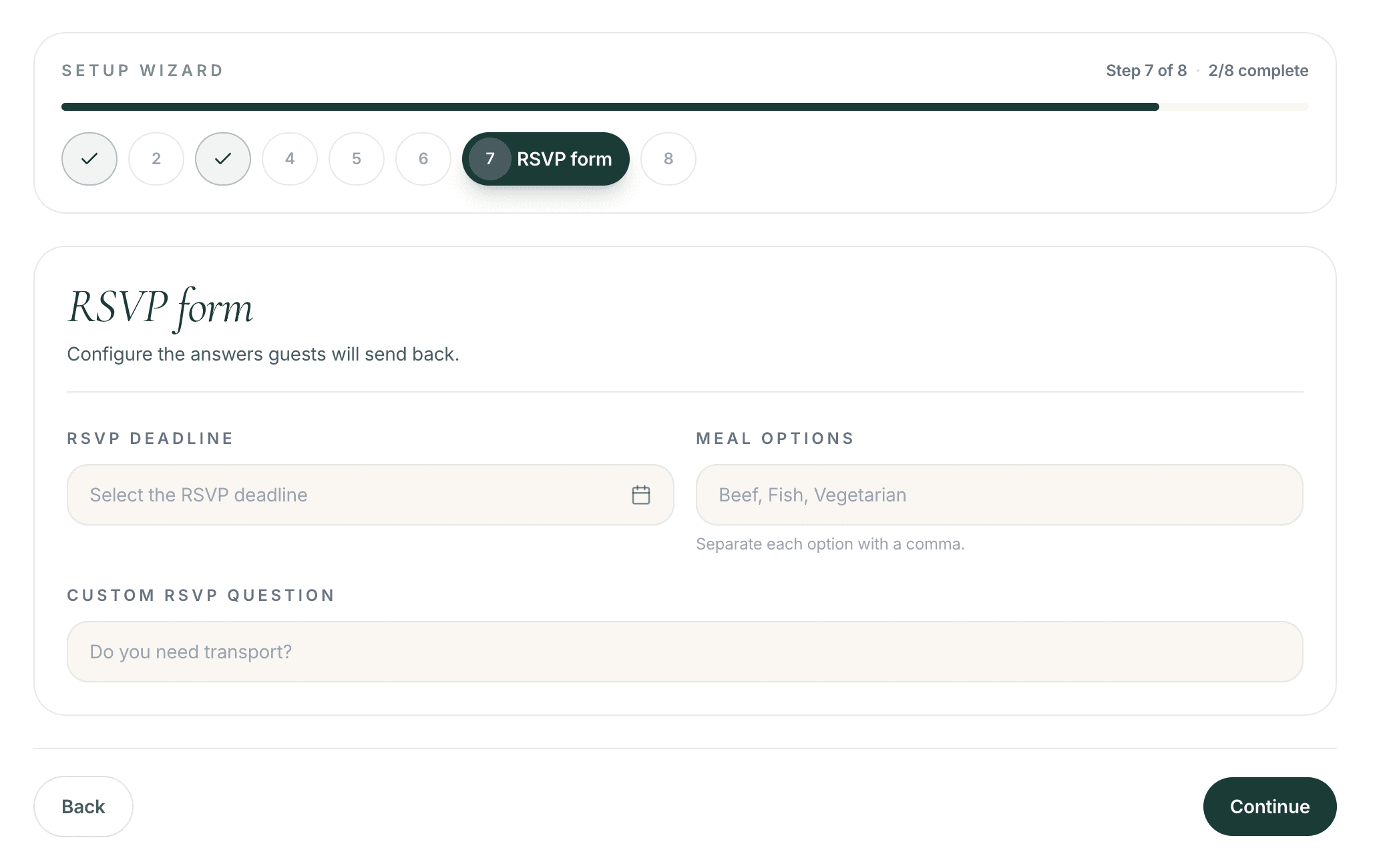
The Wedy default form line is “Please respond before” plus the date you set. The default RSVP introduction is “Please confirm your attendance.” Keep those two sentences together so the date is visible even if someone skips the FAQ.
If you still need the surrounding sentences — formal, casual, QR code — copy them from wedding RSVP wording examples.
What to do after the deadline
The deadline is the start of follow-up, not the end of planning. A normal week looks like this:
- The day after: filter pending guests and resend the same personal link
- Two or three days later: a shorter message to anyone still silent
- Before the vendor cutoff: decide the remaining maybes, then lock meals and tables
Do not open a second form. Guests who already started should finish the same invitation. If someone will only reply by phone, enter their answer in the same guest list so the caterer, the seating plan and the place cards stay aligned.
The chase itself — who to message, and how to keep one list — is in how to collect wedding RSVPs without spreadsheets.
How The Wedy uses the date
What is already built in
- A deadline field in the invitation wizard and RSVP settings
- Guests can confirm until that date — you can change it later
- The public form shows “Please respond before [date]”
- A planner alert when the deadline is within 7 days, and again after it has passed
- Personal links so the follow-up is the same invitation, not a new survey
The date is operational, not decorative. Set it when you publish, then leave it alone unless a vendor actually moves. Changing it every week trains guests to ignore it.
A deadline you can defend
Before you print or send the link
- You have the catering or venue count date in writing
- The RSVP date is at least a week earlier
- The same date is on the invitation, the form and any QR card
- Guests have at least three weeks between receiving the invite and the deadline
- Someone owns the pending list the day after it closes
- Meal names on the form match what the caterer will plate
Frequently asked questions
When should wedding RSVPs be due?
Count back from the earliest vendor headcount date — usually 7 to 14 days before the wedding — then subtract a week or two to chase pending guests. For most local weddings that lands 3 to 4 weeks before the day.
How many weeks before the wedding should the RSVP deadline be?
Three to four weeks for a local wedding, six to eight for a destination weekend. Move earlier if the guest list is large or the venue wants numbers 21 days out.
Is 2 weeks before the wedding enough?
Only if the caterer wants numbers in the final week and you are willing to chase people with almost no buffer. For a seated meal it is usually too late.
When should destination-wedding RSVPs be due?
Six to eight weeks before, because hotels and transfers book earlier. You can still confirm meal choices later once the menu is signed off.
What if guests keep replying after the deadline?
Accept the ones you can still seat and feed, enter them in the same guest list, and stop changing the public date every time someone is late. The vendor cutoff is the real wall.
Can I change the RSVP deadline in The Wedy?
Yes. The help text on the date field says guests can confirm until that date, and you can change it later. Use that for a vendor change, not for weekly extensions.
How does the deadline appear to guests?
If a date is set, the RSVP section shows “Please respond before” and the date. You can also repeat it in the invitation FAQ, which The Wedy can prefill as “Please confirm your attendance before [date]”.
Continue reading
Related stories
Wedding RSVP Wording Examples for Every Style
Copy formal, casual, digital and QR-code RSVP wording, plus the yes/no lines guests actually see on a The Wedy invitation.
Wedding RSVP Questions: 20 Examples You Can Copy
Copy 20 clear wedding RSVP questions for attendance, plus-ones, meals, allergies, transport, accessibility and weekend events.
How to Collect Wedding RSVPs Online Without Spreadsheets or Group Chats
Collect wedding RSVPs in one place instead of WhatsApp threads and spreadsheets, with structured replies that later become your seating plan.

Can You Use Your RSVP Guest List to Create the Wedding Seating Plan?
Turn confirmed wedding RSVPs into an organised seating plan without copying guest information between spreadsheets and separate tools.